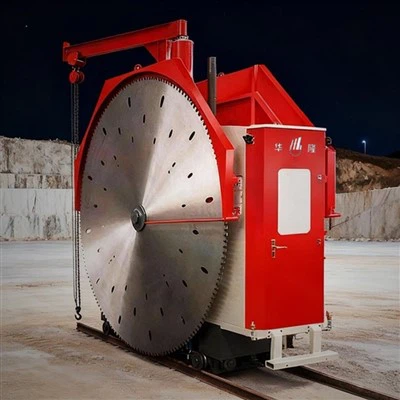
Stone processing machinery operates in harsh environments characterized by high loads, high dust levels, and alternating humidity. The stability of its performance and the extension of its lifespan depend on a scientifically sound and regular maintenance schedule. A reasonable maintenance cycle can proactively identify and eliminate potential problems, and avoid downtime and cost waste caused by excessive equipment maintenance. It is an important management tool for maintaining continuous production and ensuring processing accuracy.
The maintenance cycle should be based on the equipment manufacturer's technical specifications, while also considering specific operating conditions, processed materials, and operating time. It can generally be divided into three levels: daily maintenance, periodic maintenance, and annual overhaul. Daily maintenance is performed before and after each shift or daily operation. This includes cleaning the guide rails and worktable, checking the lubricant level and oil pressure, confirming the normal operation of the cooling and dust removal systems, and visually inspecting the condition of vulnerable parts such as cutting tools, saw blades, and grinding discs. This type of maintenance focuses on immediately removing dust, debris, and oil generated during the shift to prevent minor problems from accumulating into malfunctions.
Periodic maintenance can be scheduled weekly, monthly, or quarterly, depending on the equipment's usage frequency and load. Weekly maintenance primarily focuses on the transmission system, such as checking belt tension, coupling alignment, and the tightness of fasteners. Monthly maintenance extends to replenishing guide rail lubrication points, detecting lead screw backlash, and monitoring spindle temperature rise and vibration. Quarterly maintenance requires sealing tests on hydraulic and pneumatic circuits and verifying the functionality of limit switches and safety interlocks. For equipment operating continuously in multiple shifts, the maintenance cycle should be appropriately shortened to offset the fatigue effects of prolonged operation.
Annual overhaul is the highest level of maintenance, generally implemented during breaks in the annual production schedule. It includes disassembling key components for dimensional and positional accuracy testing, replacing guide rails, bearings, and seals that have reached their wear limits, performing dynamic balancing and geometric accuracy retesting on the entire machine, and updating aging electrical wiring and control system software. The annual overhaul aims to restore the equipment to its factory performance benchmark, providing reliable assurance for the next production cycle.
When formulating and implementing maintenance cycles, detailed maintenance records and ledgers should be established, archiving the items, results, and replacement information for each maintenance session. Trend analysis should be conducted based on operational data to dynamically adjust the cycle and content. For equipment processing high-hardness stone or operating on a three-shift system, the frequency of inspections should be increased, and preventative replacement of vulnerable parts should be implemented to reduce the risk of sudden downtime.
In short, the maintenance cycle management of stone processing machinery is a systematic task that integrates technical specifications, operating condition characteristics, and management wisdom. Only by combining sequential maintenance with condition monitoring to form a standardized and traceable execution mechanism can the service life of equipment be maximized, ensuring continuous improvement in processing quality and production efficiency.