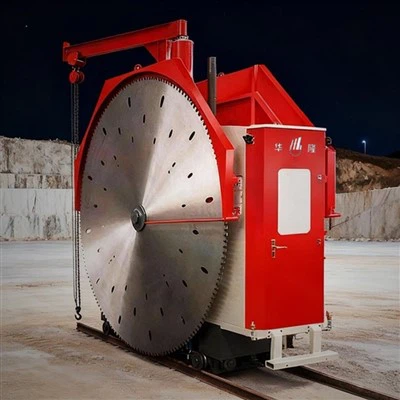
Against the backdrop of the stone industry's transformation and upgrading, simply improving the performance of individual equipment is no longer sufficient to meet the market's multiple demands for quality, efficiency, and environmental protection. Building a systematic stone processing machinery solution requires comprehensive design across processes such as process adaptation, equipment configuration, intelligent control, and operation and maintenance support, forming an integrated path covering the entire process to address the challenges of complex working conditions and diverse orders.
The first priority of the solution lies in the precise matching of processes and equipment. Different rock types vary significantly in hardness, brittleness, ductility, and texture. If the selected machinery and process parameters are out of sync with reality, processing defects and resource waste are likely to occur. Preliminary material analysis and capacity assessment should be conducted to determine the optimal equipment type and specifications for sawing, grinding, carving, and irregular shaping processes, and optimize process connections to ensure that equipment capacity matches the production cycle, reducing waiting time between processes and secondary positioning errors.
Modular and flexible equipment configuration is key to improving adaptability. The sawing, thickness setting, grinding, polishing, and engraving functions are designed as interchangeable or expandable modules, allowing for rapid reconfiguration of the production line based on order structure, enabling agile production of multiple varieties and small batches. Simultaneously, the introduction of CNC multi-axis linkage and automatic tool changing systems enables single machines to possess composite processing capabilities, reducing precision loss and logistics costs caused by dispersed processes.
The embedded intelligent management and control system makes the solution more forward-looking. Relying on an industrial internet platform, the operating data, energy consumption information, and processing quality indicators of each machine are aggregated in real time. Through algorithmic models, analysis and prediction are performed, enabling equipment status monitoring, tool life warnings, and self-optimization of process parameters. Combined with visual dashboards and mobile terminals, managers can quickly respond to anomalies and dispatch personnel and materials, significantly improving production transparency and decision-making efficiency.
In terms of operation and maintenance support, a condition-based preventative maintenance mechanism should be established. Through vibration analysis, temperature monitoring, and lubrication status assessment, potential faults can be identified in advance, and targeted maintenance plans can be developed to avoid the impact of unplanned downtime on delivery dates. Spare parts inventory and supplier networks need to be linked with production planning to ensure timely replenishment of critical components and shorten repair cycles.
Environmental protection and resource utilization are also indispensable dimensions of the solution. Wet circulation and high-efficiency dust removal systems reduce dust and wastewater emissions, while dry or slightly wet processing reduces water consumption. Crushing and grading devices are installed for scraps and waste residue to achieve secondary utilization and improve the overall utilization rate of raw materials.
Overall, the stone processing machinery solution adopts a holistic approach integrating process, equipment, intelligence, operation and maintenance, and environmental protection, breaking through the bottlenecks in the value chain from raw materials to finished products, and balancing efficiency improvement, quality stability, and sustainable development. During implementation, it should be carried out in stages according to the actual situation of the enterprise, with continuous optimization and iteration, to provide solid and lasting support for the high-quality development of the stone industry.