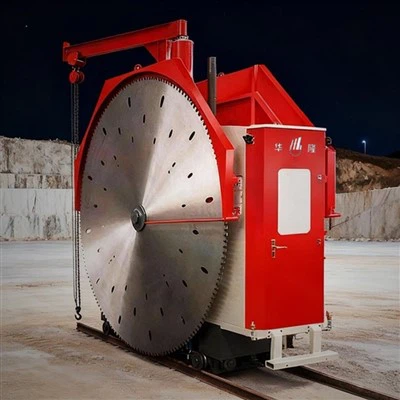
The design principles of quarry machinery are based on the needs of complex geological environments and high-intensity continuous operations.With mechanical load-bearing capacity, power transmission, adaptability to operating conditions, and safety assurance as core considerations, it constructs a systematic equipment capable of efficient stripping, crushing, screening, and transfer in open-pit or underground mining. Essentially, it combines mechanical engineering, materials science, and mining technology to achieve an optimal balance between operational capacity and economy while ensuring structural reliability.
Firstly, structural load-bearing capacity and rigidity design are fundamental principles of quarry machinery. Faced with irregular rock masses and high impact loads after blasting, the main body of the equipment often uses high-strength steel plate welding or cast steel frames, and the stress path is optimized through finite element analysis to reduce stress concentration and deformation risks. Key load-bearing components such as the chassis, boom, and crushing chamber shell must have sufficient section modulus and fatigue resistance to resist crack initiation and propagation caused by long-term cyclic loading. For tracked or wheeled chassis, the ground pressure and drive type are designed according to the ground bearing capacity and slope conditions to ensure stability during travel and operation.
The power and transmission principles emphasize efficient energy conversion and controllable output. Internal combustion engines or electric motors provide initial power, which is distributed to the actuators via hydraulic, mechanical, or electric transmission systems to achieve on-demand matching of speed and torque. Crushing machinery needs to withstand the impact of large pieces of material instantaneously; its transmission chain must have high torque reserves and buffering capacity, often using flywheels and flexible couplings to reduce the damage of peak loads to the drive unit. Screening and conveying equipment focuses on continuous and uniform power supply, using frequency converters to achieve precise control of feeding and discharging rates, reducing material blockage and overload.
The principle of adaptability to various working conditions is reflected in its ability to accommodate diverse rock types, particle sizes, and varying environments. The design must pre-determine processing parameter ranges for rocks of different hardness, allowing the equipment to adapt to significantly different rock types such as granite, limestone, and sandstone by changing cutters, liners, or adjusting the cavity shape. For environmental factors such as dust, humidity, and temperature differences, sealed protection, anti-corrosion coatings, and cooling systems are used to ensure reliable operation of electrical and hydraulic components under harsh conditions.
Safety and environmental protection principles are integrated throughout the entire design process. Key moving parts are equipped with mechanical stops, hydraulic overload protection, and electrical interlocks to prevent accidents caused by over-limit operation. The cab and operating platform are reinforced with anti-rollover, anti-falling object, and noise reduction designs to ensure personnel safety. In terms of environmental protection, low-noise structures and efficient dust removal and suppression solutions are prioritized to reduce dust diffusion and noise pollution. Interfaces for waste residue and wastewater collection and treatment are also considered to meet green mining requirements.
In summary, the design principles of quarry machinery are based on structural rigidity, high power efficiency, operating condition inclusiveness, and safety and environmental protection. Through multidisciplinary collaboration and systematic thinking, the equipment can maintain stable performance and a long service life even under extreme conditions, providing solid technical support for the efficient, safe, and sustainable development of mineral resources.