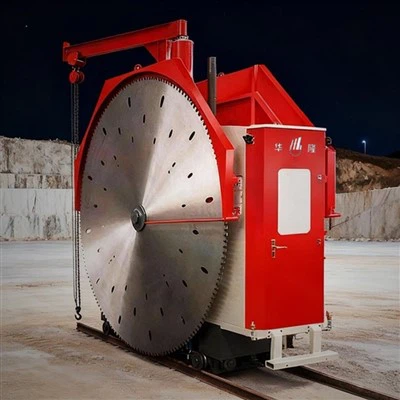
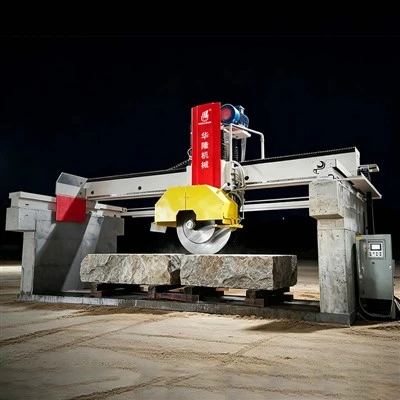
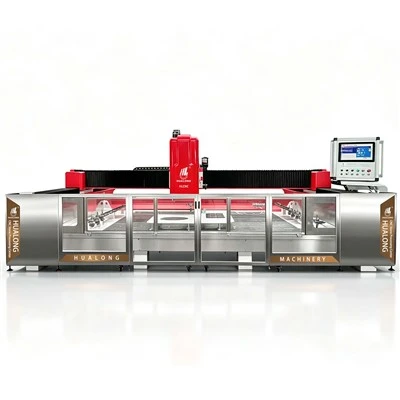
Quarry machinery operates in harsh environments characterized by open exposure, high dust levels, heavy loads, and severe vibrations. Its reliability and lifespan heavily rely on scientific and systematic maintenance management. A comprehensive maintenance system not only effectively prevents sudden malfunctions and reduces production losses due to unplanned downtime, but also maintains stable equipment performance, ensuring operational safety and resource development efficiency.
Maintenance should begin with daily inspections. Before each shift or daily operation, operators must visually and manually inspect key components, including the operating sound of the engine or electric motor, any leaks in the hydraulic system, the responsiveness of the braking system, and the adequate lubrication of transmission components. For continuously operating machinery such as crushers, screening machines, and conveying equipment, special attention should be paid to bearing temperature, vibration amplitude, and the condition of fasteners. Any abnormalities should be recorded and reported promptly to prevent minor issues from escalating into serious damage.
Lubrication management is one of the core aspects of maintenance. Bearings, gears, slide rails, and hinges in quarry machinery are highly susceptible to wear in dusty and humid environments. Lubrication must be performed strictly according to the oil type and lubrication intervals specified in the equipment manual. For dusty conditions, use well-sealed lubrication points or install dust covers, and regularly clean the grease fittings and oil lines to prevent contaminants from entering and causing lubrication failure. During high-temperature seasons or heavy-load operations, the lubrication cycle should be appropriately shortened to maintain oil film integrity and heat dissipation.
Cleanliness and dust prevention are equally important. Stone dust and silt generated during operations can adhere to radiators, filters, sensors, and electrical connectors, affecting heat dissipation efficiency and signal transmission accuracy. After each day's work, use compressed air or water to flush away visible dust (depending on the equipment's waterproof rating), and regularly replace air filters and hydraulic oil filters to ensure the cleanliness of the air intake and hydraulic systems. For wet dust suppression equipment, check nozzle patency and water pump pressure to ensure dust suppression effectiveness and reduce internal scaling.
Tightening checks and replacement of worn parts must be performed according to plan. Quarry machinery is prone to loosening of bolts, pins, and frame connections due to continuous vibration. These should be tightened one by one to the specified torque according to the maintenance plan. For easily worn parts such as bucket teeth, breaker rods, screens, conveyor belts, and liners, a replacement log should be established based on workload and wear level to avoid increased equipment load or decreased processing quality due to excessive wear. During replacement, the flatness of mating surfaces and installation accuracy should be checked, and dynamic balancing should be performed if necessary.
Electrical and control system maintenance should focus on moisture prevention, damage prevention, and functional verification. Regularly check cable insulation, terminals, and grounding reliability, and clean dust from the control cabinet, keeping it dry. Sensors, limit switches, and safety interlock devices should be functionally tested to ensure timely power cut-off or alarm activation in abnormal situations.
Furthermore, a complete maintenance record and data analysis mechanism should be established, archiving information on each inspection, lubrication, cleaning, tightening, and replacement. Trend analysis can be used to predict potential risks and optimize maintenance cycles and content. For machinery operating continuously in multiple shifts or processing high-hardness rocks, the frequency of inspections should be appropriately increased, and preventative maintenance should be implemented to minimize the probability of sudden malfunctions.
In short, quarry machinery maintenance is a systematic task integrating daily inspections, periodic maintenance, condition monitoring, and data management. Only by combining standardized requirements with actual site conditions and establishing a systematic and traceable execution mechanism can we ensure the long-term stable operation of equipment under harsh working conditions, providing a solid guarantee for the safe, efficient, and sustainable development of quarrying operations.