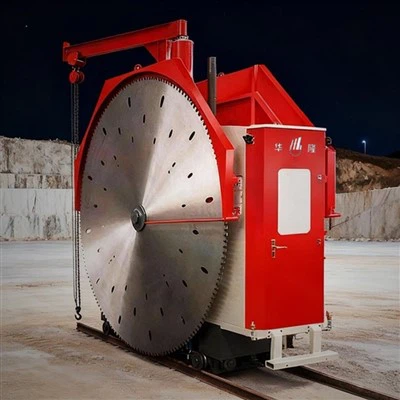
The technical specifications for quarry machinery and equipment outline the technical requirements and performance indicators that should be followed throughout the design, manufacturing, installation, use, and maintenance of various types of machinery used in open-pit or underground quarrying operations.These specifications aim to unify quality standards, ensure operational safety, improve resource utilization efficiency, and consider environmental protection. As a crucial technical basis for mining production, these specifications combine the rigor of mechanical engineering with the specificities of mining processes, providing robust support for stable equipment operation and sustainable industrial development.
In the design and manufacturing stages, the technical specifications first clearly define the structural strength and load-bearing capacity requirements. Quarry machinery often faces high impact, heavy loads, and continuous vibration conditions. Its main structure must utilize high-strength steel or cast steel components, and the stress path must be optimized through finite element analysis to ensure that key components such as the frame, boom, and crushing chamber shell possess sufficient section modulus and fatigue resistance. For components involving rotation and reciprocating motion, material hardness, heat treatment processes, and dimensional tolerances should be specified to prevent premature wear and deformation. The power and transmission systems must meet the technical specifications for rated power, torque reserve, and overload protection to ensure stable operation under instantaneous loads.
Safety performance is a core component of the technical specifications. The specifications specify clear parameters and test methods for braking systems, anti-rollover devices, emergency stop, and interlocking protection, requiring critical moving parts to quickly cut off power or issue alarms in abnormal situations. Electrical systems must meet requirements for explosion-proof, moisture-proof, short-circuit protection, and grounding continuity, especially for equipment used underground or in areas with high dust concentrations, which should meet the corresponding protection levels and insulation standards. The cab and operating platform must meet anti-rollover, anti-falling object, and noise reduction design specifications to ensure the personal safety of operators.
Operational adaptability specifications cover the ability to cope with diverse rock types, grain sizes, and complex environments. Equipment should be able to adjust operating parameters according to rocks of different hardness and brittle-ductile characteristics, and provide convenient options for changing cutters, liners, or cavity shapes. For environmental factors such as dust, humidity, and temperature differences, the specifications require the use of sealed protection, anti-corrosion coatings, and cooling systems in critical areas to ensure reliable operation of electrical and hydraulic components under harsh conditions. In terms of environmental protection, the regulations set forth specific requirements for noise limits, dust suppression measures, exhaust emissions, and wastewater treatment, promoting green mining and cleaner production.
Installation and commissioning must be carried out in accordance with the regulations, including foundation construction, positioning calibration, and functional verification. The foundation must be designed according to load and vibration characteristics, and the anchor bolt tightening torque, levelness, and coaxiality must meet the tolerance range. The integrated commissioning should complete no-load and load tests, and each safety device should be inspected and recorded to ensure that all indicators meet the standards before the equipment is put into operation.
The usage and maintenance regulations clearly stipulate the periodic requirements for lubrication, fastening, replacement of worn parts, and electrical testing, emphasizing record keeping and data analysis to support preventative maintenance and life assessment.
In summary, the technical specifications for quarry machinery and equipment, based on structural reliability, safety reliability, environmental adaptability, and maintenance traceability, construct a rigorous system of guidelines covering the entire life cycle of the equipment. Strict adherence to these specifications can effectively improve equipment performance and operational safety, reduce failure rates and environmental impact, and provide a solid technical guarantee for the high-quality development of the quarry industry.