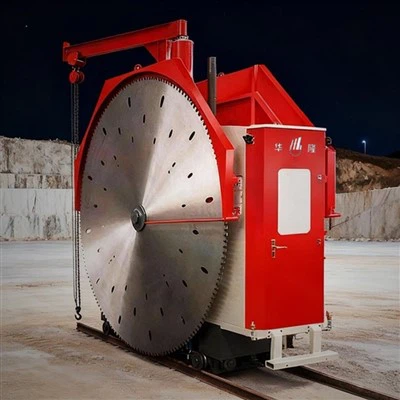
In the stone processing industry, the performance stability and processing precision of machinery directly determine product quality and production efficiency. Establishing a scientific and rigorous inspection process is not only a comprehensive review of the equipment's condition but also a crucial barrier to prevent malfunctions and ensure operational safety. Through systematic inspection, potential problems can be identified in a timely manner before commissioning, during operation, and after maintenance, ensuring the machinery is always in optimal working condition.
The inspection process typically begins with the installation and acceptance phase. New equipment or equipment after major repairs requires verification of geometric and motion accuracy, including guide rail straightness, spindle and worktable parallelism, and repeatability of each axis. Data is collected using high-precision instruments such as laser interferometers and ballbars, and compared with factory or design standards. Production can only commence after confirming that the basic performance of the machinery meets the standards. This stage also requires checking the sealing and pressure stability of the hydraulic, pneumatic, and lubrication systems to eliminate the risk of leakage and insufficient pressure.
Daily operational inspection is a key link in ensuring continuous stability. Before each shift or daily operation, operators should perform a routine inspection, covering abnormal noises from transmission components, changes in oil and water temperatures, and the operating status of cooling and dust removal devices. For CNC control systems, the accuracy of coordinate zero points, tool compensation values, and machining program calls should be verified. Periodic inspections are planned weekly or monthly, including spindle radial and axial runout, feed system backlash, and guideway wear measurement. Dynamic load testing should be performed when necessary to assess performance degradation under actual operating conditions.
Specialized inspections are often carried out after equipment overhauls, relocations, or process changes. At these times, it is necessary to recalibrate the travel limits and soft/hard limit functions of each axis, verify the reliability of safety interlock devices, and perform insulation and grounding continuity tests on the electrical system to prevent accidents caused by leakage or short circuits. For machinery involving high-speed cutting or heavy-duty machining, vibration spectrum analysis should also be performed to identify potential imbalances or signs of early bearing failure.
Complete records of inspection results must be maintained, including inspection time, items, data, and handling opinions. A trend analysis file should be established to provide a basis for subsequent preventative maintenance. Through a comprehensive, multi-level testing mechanism, the quality controllability and operational safety of stone processing machinery have been significantly improved, thus providing solid support for the efficient and stable development of the industry.