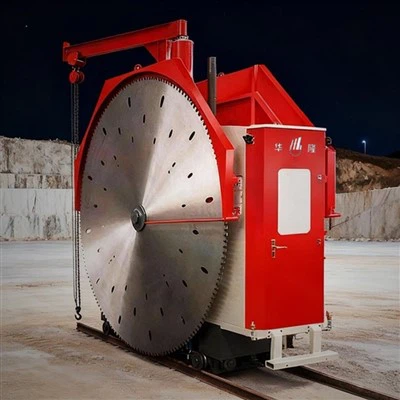
Quarry machinery construction standards are technical specifications and operating procedures formulated for the entire process of open-pit or underground quarrying operations. They aim to ensure efficient, stable, and safe resource development under complex geological and working conditions by unifying requirements for equipment selection, installation, use, maintenance, and safety management. As a crucial support for mining production, these standards reflect both a pursuit of operational quality and a comprehensive consideration of personnel safety, environmental protection, and sustainable development.
The construction standards first clarify technical requirements in the equipment selection and configuration stage. Based on the ore body occurrence conditions, rock hardness, and production capacity planning, machinery types with matching power, reliable structure, and suitable operating range should be selected, ensuring that key components such as braking systems, transmission devices, hydraulic systems, and protective devices meet relevant safety standards. Equipment involved in initial stripping and mining after blasting should possess sufficient stability and impact resistance to prevent overturning and instability on uneven or soft ground.
Strict positioning and calibration specifications must be followed during the installation and commissioning stages. Mechanical foundations should be designed and constructed based on load and vibration characteristics to ensure a flat and robust installation surface, minimizing displacement and deformation during operation. Before commissioning, each functional system, such as crushing, screening, and conveying, should undergo no-load and load tests to verify the consistency of operating parameters with design specifications. Safety interlocks, emergency stops, and limit devices should be checked one by one to ensure their sensitivity and reliability.
Operating standards during operation are crucial for ensuring continuous safety. Operators must be specially trained and certified, familiar with equipment performance, process parameters, and emergency response procedures. Construction standards specify clear limits for feed rate, crushing chamber load, screening amplitude, and conveyor belt speed to prevent overload leading to equipment damage or material blockage. In areas with significant dust, noise, and vibration, wet dust suppression, sound insulation, and regular vibration monitoring should be implemented to protect personnel health and extend equipment life.
Maintenance and repair standards emphasize planning and traceability. Periodic maintenance plans should be developed based on equipment usage frequency and operating intensity, covering lubrication, fastening, replacement of worn parts, and electrical insulation testing. Complete records should be maintained for trend analysis and fault prevention. Critical structural components and load-bearing parts must undergo regular non-destructive testing or geometric accuracy retesting. If cracks, deformation, or signs of fatigue are found, the equipment should be immediately taken out of service and repaired.
Safety and environmental standards are implemented throughout the entire construction process. The construction site should have clear warning signs and isolation facilities; unauthorized personnel are strictly prohibited from entering hazardous areas. Equipment operation must comply with fire prevention, explosion prevention, and electrical safety regulations. Leakage prevention measures for hydraulic and fuel systems must be complete. Regarding environmental protection, the standards require control of dust and noise emissions, rational use of water resources, and proper disposal of waste, promoting green mining and ecological restoration.
In summary, the quarry machinery construction standards, based on technical specifications, operating procedures, maintenance requirements, and safety and environmental regulations, construct a management and control system covering the entire life cycle of the equipment. Strictly enforcing these standards can not only improve the efficiency and quality of quarrying operations, but also play a key role in preventing accidents and reducing environmental impact, providing a solid institutional guarantee for the sustainable development of the mining industry.