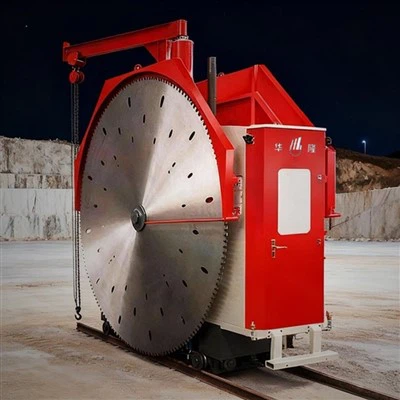
How Much Does a 5‑Axis CNC Stone Bridge Saw Cost?
Latest Price List 2026
Latest market price for 5‑axis CNC stone bridge saws in 2026: around $21900 to $511,000.
Exact price depends on quality and manufacturer:
Small domestic Chinese brands: approx.$21900- $29,200
Mid‑to‑high‑end domestic Chinese:$36500 -$58,400
High‑end imported machines:$102200 -$511,000+
8 Key Factors Affecting 5‑Axis Bridge Saw Prices
Price differences are determined by multiple factors. Understanding these helps you match budget to needs and avoid overpaying for unneeded features.
|
No. |
Key Factor |
Impact on Price |
|
1 |
Axis count & simultaneous motion |
5‑axis simultaneous vs. 5+1‑axis: ~10% price difference. True 5‑axis (4‑axis simultaneous as standard; high‑end models support 5‑axis) enables complex 3D contour machining. Verify true 5‑axis (A‑axis 0–90° tilting + C‑axis ±360° rotation) to avoid fake 5‑axis systems. |
|
2 |
CNC controller brand |
The "brain" of the machine, accounting for 15–25% of total cost. Domestic systems: lower cost; imported systems: higher precision & stability. Price gap: $7300-$14,600 for same configuration. |
|
3 |
Spindle power & speed |
Core to cutting efficiency and surface finish. 11 kW (entry) vs. 15–18.8 kW (high‑end): ~+20% price when power doubles. Speed ranges: 0–18,000 rpm (entry) vs. 0–24,000 rpm (high‑end). High speed recommended for hard materials like quartz and engineered stone. Suggest ≥15 kW for granite, ≥11 kW for engineered stone. |
|
4 |
Table size & load capacity |
Standard 3000×2000 mm suits most projects; large 3500×2100 mm handles bigger slabs. Premium for large tables: ~5%. Choose based on your maximum slab size to avoid overinvestment. |
|
5 |
Structural rigidity |
Determines long‑term accuracy and tool life. Welded steel (lower cost, average damping) vs. cast iron + imported linear guides (higher cost, excellent rigidity). |
|
6 |
Brand premium & service |
Top international brands (Breton, Intermac, CMS): ~30% premium, with factory training, global warranty, and technical support. Leading domestic brands (Hualong): strong value, fast after‑sales response. Evaluate service response time. |
|
7 |
Software & CAM integration |
Imported brands usually include professional stone CAM software; domestic brands often use general CAM. Software directly affects efficiency and machining quality. |
Price vs. Configuration Comparison Table (Chinese 5‑Axis CNC Bridge Saws)
|
Price Range |
Axis Configuration |
CNC System |
Spindle Power |
Accuracy |
|
$21900-$29,200 |
5‑axis simultaneous |
Basic domestic |
11–13 kW |
±0.05 mm |
|
$29200-$43,800 |
5‑axis simultaneous |
Mid‑range domestic / imported |
13–15 kW |
±0.05 mm |
|
$43800-$73,000 |
5+1‑axis |
Imported system |
15–22 kW |
±0.03 mm |
Main Brands & Price Comparison (Domestic vs. Imported)
|
Brand |
Origin |
Model Series |
Price Range |
Core Strengths |
Target Customers |
After‑Sales |
|
Domestic |
||||||
|
Hualong Machinery |
China, Fujian |
HKNC‑450 / 500 / 650 |
$36500-$58,400 |
Italian software integration, rigid precision structure |
Project orders, large‑scale production |
Fast response, global service |
|
Imported |
||||||
|
Breton |
Italy |
Spark Series |
$292000-$511,000 |
Top precision, industry benchmark, in‑house process support |
High‑end custom, luxury stone |
Global warranty, factory training |
|
Intermac (Biesse) |
Italy |
Master Series |
$262800-$437,900 |
Strong software ecosystem, full‑line integration |
Large‑scale intelligent factories |
Factory support, local agents |
|
CMS SCM |
Italy |
Record Series |
$248100-$408,700 |
Flexible configurations, European quality certification |
Mid‑to‑high‑end export processors |
European standard service |
|
Park Industries |
USA |
Fusion Series |
$233600-$408,700 |
Strong local support, exceptional stability |
North America / multinational firms |
Priority North American support |
|
BACA Systems |
USA |
AutoSaw Series |
$204400-$350,300 |
Robot integration, industry‑leading automation |
High‑volume standardized / smart factories |
Automation integration support |
|
Donatoni |
Italy |
DJP Series |
$233600-$394,100 |
Proven reliable design, well‑tested |
Mid‑to‑high‑end export clients |
European service standards |
Key Variables Affecting ROI
Actual ROI calculation includes:
Equipment utilization: theoretical daily output × operating rate (typically 70–85%)
Material loss rate: 8–15% for standard cutting; high‑precision machines reduce to 5–8%
Tool cost control: premium tools cost more but cover larger area per tool, lowering total cost
Labor cost: higher automation means fewer operators
Yield rate: higher‑accuracy machines improve yield and reduce rework & scrap
Selection Advice (2026)
Best value: Domestic top brands (e.g., Hualong Machinery)
Ultimate precision & brand prestige: Top imported brands (Breton, Intermac)
Used machines: Caution advised; only buy with professional inspection and extended warranty
Golden Rules for Buying 5‑Axis Equipment in 2026
Needs first, not specs
Avoid "top‑of‑the‑line" temptation. Define annual volume, materials, accuracy, and budget first.
On‑site test cut beats spec sheets
Verify real‑world performance: accuracy, smooth running, cut finish, ease of use.
Service matters more than the machine
Fast response, spare parts availability, and support are more important than specs alone.
Decide by TCO (Total Cost of Ownership)
Purchase price is just the start; 5‑year TCO shows real cost.
Core Technical Parameters Explained
Positioning & repeatability accuracy
Positioning accuracy: deviation between actual and target position
Repeatability: variation over multiple returns to the same position
Recommended: Basic ±0.05 mm, Mid‑high ±0.03 mm, High‑end ±0.02 mm
Spindle speed & power
Higher rpm = smoother finish & higher efficiency
Higher kW = heavier cutting & deeper passes
Suggested combinations:
Marble: 15 kW / 15,000 rpm
Granite: 18 kW / 18,000 rpm
Quartz / sintered stone: 22 kW / 22,000 rpm
Travel & table dimensions
X‑axis: max length (typically 3000–3500 mm)
Y‑axis: max width (typically 2000–2100 mm)
Z‑axis: max thickness (typically 200–400 mm)
Simultaneous axes & A/C axis travel
True 5‑axis: A‑axis 0–90° continuous tilt + C‑axis ±360° continuous rotation
Fake 5‑axis: A‑axis only fixed positioning, no simultaneous machining
Application Map for 5‑Axis Stone Machinery
Kitchen & bath countertops
Straight/curved cutting, sink cutouts, edge profiling (straight, bullnose, round, bevel), backsplashes, etc.
Architectural decoration
Curved curtain wall components, Roman columns, twisted columns, carved lines, stair treads, handrails, thresholds
Art carving & crafts
Reliefs, openwork carving, 3D sculpture, tombstone carving, high‑value gem & luxury stone items
FAQ
Q1: What is the main difference between 5‑axis and 4‑axis stone bridge saws?
A: 5‑axis adds an A‑axis (0–90° head tilt), enabling angled cuts and complex 3D machining without re‑clamping.
Q2: How big is the real accuracy gap between Chinese and imported 5‑axis machines?
A: High‑end imported (Breton/Intermac): ±0.02 mm. Mid‑to‑high Chinese: ±0.03–0.05 mm. Difference ~0.01–0.03 mm. Chinese machines are fully sufficient for standard countertops.
Q3: What spindle power is suitable?
A: ≥11 kW for marble/engineered stone; ≥15 kW for granite; ≥18 kW for quartz/sintered stone. 22 kW+ suits deep cuts (80–100 mm) but raises power and tool costs.
Q4: Typical lead time?
A: Production 4–6 weeks. Order 2 months early for installation and commissioning.
Q5: Site requirements for installation?
A: Floor load ≥5 tons/m²; 380V/50Hz/3‑phase (customizable abroad); power 15–45 kW; ceiling height ≥3.5 m; industrial dust extraction; water supply; overhead crane or forklift recommended.
Q6: Which CNC system is best?
A: High‑end Hualong models use Italian ESA control system.
Q7: Payment terms?
A: Standard: 30–50% deposit, balance before shipment.
Q8: Are used 5‑axis stone bridge saws worth buying?
A: Good value if ≤5 years old, at ~45–60% of new price. Inspect: guide/ball screw wear, spindle hours, CNC system, hydraulic/pneumatic aging; test cut required.
Q9: What training and support are provided?
A: Standard: 2–5 days on‑site training (operation, basic programming, daily maintenance).
Q10: How to verify true 5‑axis simultaneous motion?
A: Check A‑axis travel (0–90° continuous); test simultaneous curved cutting on angled surfaces; request live complex 3D demo.
Q11: What materials can a 5‑axis bridge saw process?
A: Almost all hard stones: marble, granite, quartz/engineered stone, ceramic sintered stone, sandstone, limestone.
Q12: How long is the warranty? Is extended warranty worth it?
A: Industry standard: 12 months.
Q13: How long does installation & commissioning take?
A: Typically 3–7 days:
Day 1: placement, leveling, wiring
Day 2: precision adjustment, system setup
Days 3–4: dry run, test cutting
Days 4–7: acceptance, operator training
Summary & Buying Recommendations
2026 price range:
Chinese machines: ~$29,200–73,000
European/American: $102,200–511,000
Global mainstream: $43,800–219,000 (over 60% of demand)
Chinese 5‑axis technology is highly mature, costing ~50% less than European/American equivalents.
Main cost drivers: CNC system (15–20%), spindle (15–20%), structural rigidity (20–30%), brand premium (10–15%).
Core rule: match configuration to actual production needs, not over‑spec or under‑spec.