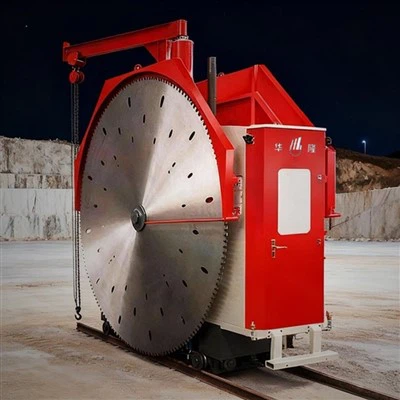
In the modern stone industry system, stone processing machinery is not only an important carrier of production technology, but also plays a pivotal role in the entire process of raw material input, semi-finished product circulation, and finished product output due to its unique logistics characteristics. This logistics attribute is reflected in physical handling and process connection, as well as in the coordinated management of information flow and material flow, directly impacting the efficiency and cost of industry operations.
From a material flow perspective, stone processing machinery is often arranged in conjunction with lifting, conveying, and warehousing facilities to form a continuous work line. The arrival of raw blocks, the transfer of sawn slabs, and the loading and unloading of materials in grinding and carving all rely on equipment such as overhead cranes, railcars, and roller conveyors for efficient displacement. The layout of the machinery's workstations must consider both the processing sequence and the principle of minimizing logistics paths to reduce ineffective handling and waiting time, and improve site utilization. Especially in multi-variety, small-batch production, reasonable workflow planning can reduce logistics disruptions caused by process changes.
At the process connection level, the operating rhythm of stone processing machinery must match the logistics rhythm. For example, after thickness determination, the slabs must be promptly sent to the rough grinding area; otherwise, surface oxidation or contamination will increase the difficulty of subsequent processing. The irregularly shaped parts produced in the carving process vary in size and shape, requiring a flexible sorting and temporary storage system to avoid blocking passageways. The higher the degree of automation of the machinery, the more seamless the "machine-material" connection can be achieved through built-in conveying and buffering devices, thereby shortening the production cycle.
Information-based logistics management further strengthens the logistics attributes of the machinery. With the help of barcodes, RFID, and data acquisition systems, the operating status, processing progress, and material location of each machine can be tracked in real time. The dispatch center can then optimize transportation tasks and personnel allocation, reducing idle loads and repetitive handling. This visualized control not only improves response speed but also provides data support for lean production and on-time delivery.
Furthermore, the logistics nature of stone processing machinery is also reflected in cross-plant collaboration. Large projects often require multi-site processing; the standardized interfaces and universal transfer platforms of the machinery ensure the smooth flow of semi-finished products between different sites, expanding the capacity allocation space.
Overall, the logistical nature of stone processing machinery permeates the entire production process, serving as a fundamental condition for achieving efficient, low-consumption, and flexible manufacturing. With the development of intelligent manufacturing and smart logistics, its pivotal role will become even more prominent, providing a solid guarantee for building a robust and efficient supply chain system for the stone industry.