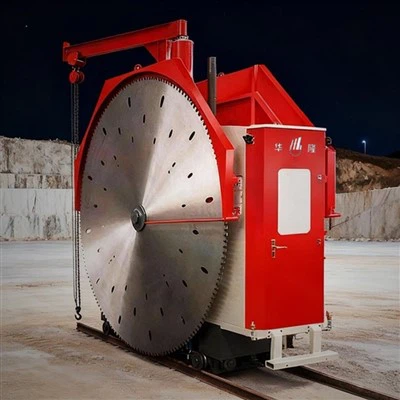
Quarry machinery implementation standards are technical and management specifications that guide the entire process of equipment research and development, selection, installation, use, and maintenance.They aim to unify technical requirements, clarify safety baselines, improve operational efficiency, and reduce environmental impact. In the context of increasingly safety-oriented, green, and intelligent mineral resource development, these standards are not only the institutional cornerstone for ensuring personal and equipment safety but also a key support for promoting technological progress and sustainable development in the industry.
The implementation standards first establish basic thresholds in the equipment design and manufacturing stages. Based on the operational characteristics of quarries, relevant standards set quantitative requirements for the structural strength, impact resistance, stability, and durability of machinery. For example, for heavy-duty equipment such as crushers, screeners, and conveyors, the standards specify the material grades, cross-sectional dimensions, and fatigue life testing methods for key load-bearing components, and require that the power and transmission systems have sufficient torque reserve and overload protection capabilities under rated operating conditions. For equipment in underground or enclosed mining areas that may come into contact with flammable and explosive gases, explosion-proof ratings and electrical safety specifications must also be met to mitigate risks from the design stage.
During the installation and commissioning phase, the implementation standards clearly define the procedures and tolerance ranges for foundation construction, positioning calibration, and functional verification. The equipment foundation must be designed and constructed according to load and vibration characteristics, ensuring that the anchor bolt tightening torque, levelness, and coaxiality meet the specifications to prevent abnormal vibration or premature failure caused by installation deviations. The integrated commissioning phase requires sequential completion of no-load and load tests, and the braking system, safety interlocks, emergency stop devices, and limit switches must be inspected one by one to ensure their sensitivity and reliability, and traceable acceptance records must be created.
The operation and maintenance standards emphasize standardization and repeatability. The standards specify detailed limits for parameters such as feed rate, crushing chamber load, screening amplitude, and conveyor belt speed under different operating conditions to prevent overload and material blockage. Operators must receive systematic training and be certified to operate the equipment, possessing proficiency in equipment performance, emergency response, and environmental protection measures. Maintenance standards specify periodic requirements for lubrication, tightening, replacement of worn parts, and electrical insulation testing, emphasizing record keeping and data analysis to facilitate preventative maintenance and life assessment.
Safety and environmental standards are implemented throughout the entire equipment lifecycle. Construction sites must be equipped with prominent warning and isolation facilities, and unauthorized personnel are strictly prohibited from entering hazardous areas. Equipment operation must comply with fire prevention, explosion prevention, rollover prevention, and electrical safety regulations, and hydraulic and fuel systems must have complete leak prevention measures. Regarding environmental protection, the standard stipulates emission limits for dust, noise, exhaust gas, and wastewater, requiring the installation of wet dust suppression, closed conveying, and noise isolation facilities, and the implementation of waste residue classification, collection, and resource utilization measures to promote green mining.
The implementation of the standard also relies on a supervision and certification mechanism. Third-party testing institutions independently verify equipment types, key performance indicators, and safety devices, while government regulatory departments ensure the standard's implementation through spot checks and enforcement. Enterprises should establish a standard implementation assessment and continuous improvement system internally, integrating compliance requirements into their production management system.
Overall, the quarry machinery implementation standards, based on technical requirements, safety procedures, and environmental indicators, construct a rigid constraint and guidance system covering the entire equipment lifecycle. Strictly implementing and continuously improving these standards can effectively prevent accidents, improve resource utilization efficiency, reduce environmental impact, and provide a solid guarantee for the stable and sustainable development of the quarry industry.